

District Cooling in Qatar: From Energy Demand Challenge to Strategic Infrastructure
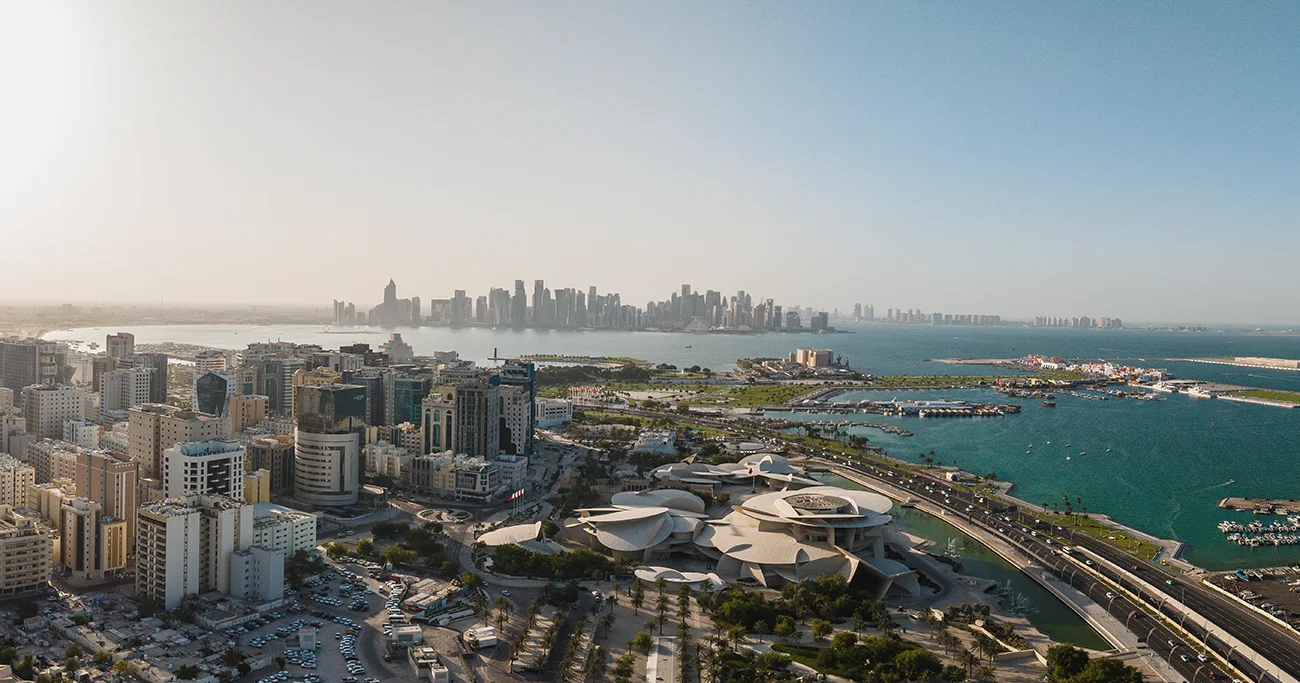
As Qatar’s built environment continues to expand, one challenge grows alongside it and that is cooling demand. This is not a challenge confined to buildings alone. Cooling is now extending into open public spaces, outdoor markets, plazas, and walkways, reflecting just how central it has become to everyday life in the region. Within buildings, cooling alone accounts for roughly 50 to 70% of their total energy consumption, making it the single largest driver of electricity demand in the region.
Managing how that cooling is produced and delivered has a direct impact on energy use, infrastructure planning, and long-term sustainability. What used to be a decision made at the building level is now shaping how entire districts are planned, how the grid is managed, and how Qatar meets its long-term energy goals. That shift is putting district cooling on the map as a critical piece of how Qatar’s urban fabric will continue to develop.
A Cooling-Driven Energy System
Cooling is not just another item on Qatar’s energy list. It is one of the biggest factors shaping the entire system. Cooling demand also changes significantly across the year, with the heaviest use concentrated during the summer months and easing only through the cooler winter period.
This seasonal pattern puts real pressure on the electricity system during summer, when both demand and temperatures are at their highest.
A large share of this demand comes from the residential sector, which alone accounts for nearly 49% of total electricity consumption in Qatar, with two thirds of that being cooling. This reinforces just how much weight cooling carries across the wider system.
Where the Current System Falls Short
Estimated Cooling Technology Market Share - Qatar
Chart 1: Cooling system market share, Source: GSAS Standards
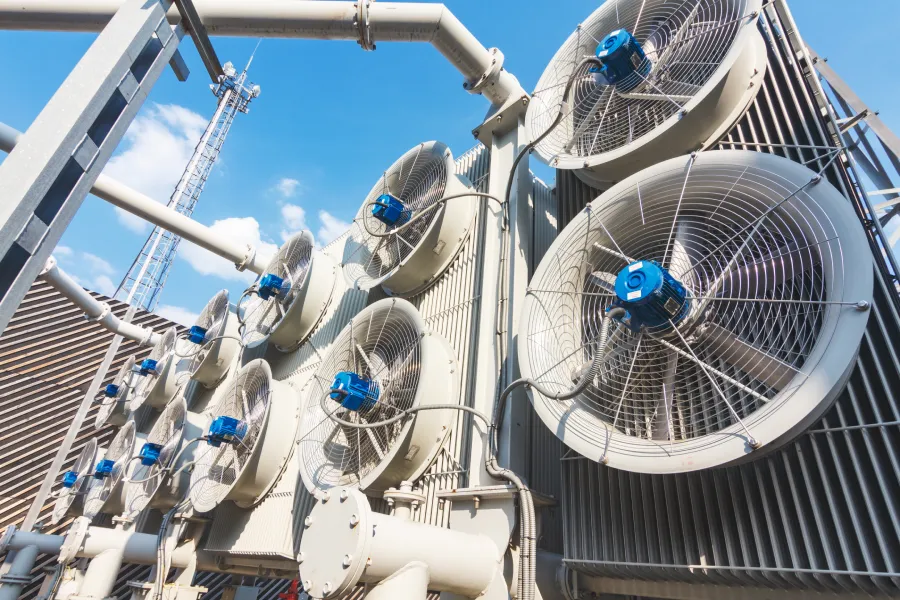
Most of this demand today is still met through Direct Expansion systems such as split units, package units, and these solutions serve individual buildings adequately. But each one operates independently with no coordination or shared capacity between them.
The real limitation shows up at a larger scale. When every building runs its own system, there is no ability to take advantage of load diversity across different buildings, where some may be at peak demand while others are not. Every system responds to its own peak conditions simultaneously, which places maximum stress on the grid at the same time. There is also no mechanism to shift or manage demand across buildings during critical periods. On top of that, each building requires its own dedicated plant space and ongoing maintenance, adding to the overall burden on building owners and operators. As Qatar’s built environment grows denser and cooling demand increases, these limitations become harder to ignore.
Understanding How District Cooling Works
District cooling takes a different approach. Rather than each building producing its own cooling independently, it centralizes chilled water production and distributes it across multiple buildings through a shared network.
It is worth being clear about what district cooling actually is. It is not simply a large on-site chiller plant serving a single development under one ownership. District cooling operates as a utility model, supplying cooling to multiple independent buildings and customers, often across wider urban or campus-scale infrastructure. This allows different buildings to share capacity and benefit from the natural variation in their load patterns.
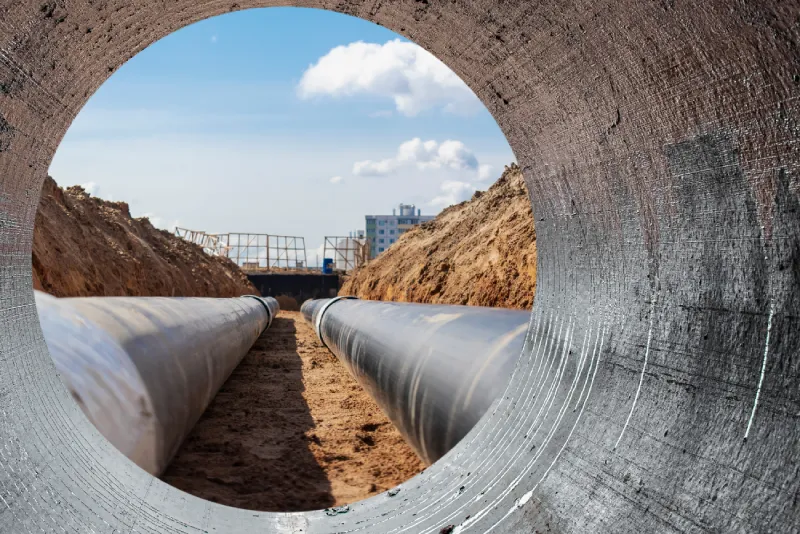
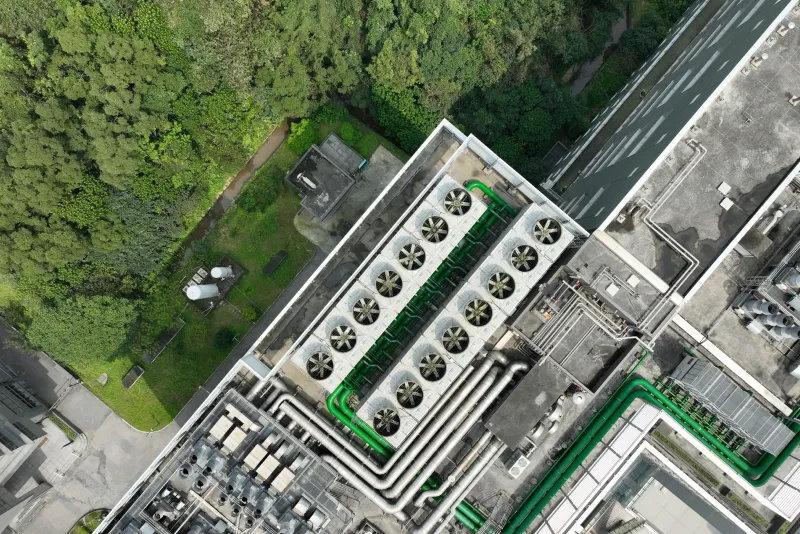
At its core, district cooling operates as a centralized loop. Chilled water is produced at a central plant and delivered to connected buildings through insulated pipelines. At the entry point of each building, a plate heat exchanger acts as the interface between the district network and the building’s internal cooling system. This ensures the district’s chilled water circuit and the building’s internal circuit remain separate while still allowing efficient heat transfer. The chilled water on the building side absorbs heat from the indoor spaces, bringing temperatures down. The warmer return water is then sent back to the central plant, where it is cooled again and recirculated.
Because cooling demand is aggregated across multiple buildings, district systems benefit from load diversity, where peak demand does not occur simultaneously across all users. This results in a smoother overall load profile, allowing the central plant to operate under more stable and optimized conditions. In practice, this leads to higher system efficiency and improved overall performance compared to isolated building-level systems operating independently at their respective peak loads.
Current Market Reality and Untapped Potential
Despite its clear advantages, district cooling still covers a relatively small share of the overall market. It accounts for approximately 15% of total cooling capacity in Qatar, even though around 65 district cooling plants are already in operation across the country. This means that nearly 85% of cooling demand is still being handled by decentralized systems. When viewed against the full scale of national cooling demand, this highlights a significant gap between where things stand today and what is actually possible.
There is also a broader system cost to this reality. When most cooling is handled independently at the building level, the opportunity to aggregate loads, manage demand, and coordinate operations is largely missed. The energy system ends up carrying a heavier burden than it needs to, particularly during peak periods.
Efficiency at Scale
One of the most straightforward advantages of district cooling is its performance. Centralized systems typically operate in the range of 0.58 to 0.70 kW/TR, which reflects significantly lower energy consumption compared to conventional cooling technologies like split units, packaged systems, and standalone chillers that operate at much higher efficiency.
Chart 2: Derived from publicly available data including industry reports and GSAS projects.
This gap does not come purely from better equipment. It comes from operating at scale, where load diversity, optimized controls, and stable conditions allow the system to consistently perform at a level that isolated systems simply cannot match.
Why This Matters
- Improving how cooling is delivered has a direct effect on the broader energy system.
- More efficient cooling at a district scale directly reduces pressure on the grid during peak summer periods, lowering the need to build additional generation capacity purely to meet seasonal demand.
- District cooling systems also support thermal energy storage, allowing cooling to be produced during off peak hours and used during the day, further smoothing demand on the grid.
- At the building level, connecting to a district network frees up space previously dedicated to mechanical plant rooms, giving developers more flexibility in building design.
- Lower energy consumption also means lower emissions, directly supporting Qatar's national sustainability goals.
From Option to Necessity
As Qatar’s built environment continues to grow and cooling demand rises alongside it, the question is no longer whether district cooling should be scaled up. The real question is how quickly that can happen. What was once considered a solution for specific developments is now becoming a fundamental part of how Qatar plans its infrastructure, manages its energy system, and works toward its sustainability goals. The shift from isolated building level systems to integrated district scale networks is not just a technical transition. It is a necessary step toward building a more efficient and resilient future for Qatar’s growing urban landscape.