
Public-Private Partnerships in Qatar: Delivering PPP Advisory

beautiful Towers, hotels, apartments - Doha, Qatar

As Qatar continues to advance its infrastructure, economic diversification, and public service ambitions under Qatar National Vision 2030, Public-Private Partnerships (PPPs) are playing an increasingly important role in delivering major projects across sectors such as education, healthcare, utilities, energy, transport, and municipal services.

PPPs enable government entities to partner with the private sector to design, finance, build, operate, and maintain infrastructure and public assets over the long term. This model supports greater efficiency, innovation, risk-sharing, and value for money, while helping governments accelerate project delivery without placing the full financial burden on the public sector.

For Qatar, PPPs are becoming a key mechanism to support sustainable growth, improve public service delivery, and attract private investment into strategic national projects.

The Growing Importance of PPPs in Qatar

Qatar has already demonstrated strong momentum in adopting PPP models across multiple sectors. As public sector entities seek to optimize capital expenditure and improve operational performance, PPPs provide a practical route to:

Public-Private Partnership

PPP projects are particularly valuable where there is a need for long-term asset performance, strong operational management, and measurable outcomes.
In Qatar, Public-Private Partnerships (PPPs) are increasingly being explored for schools, healthcare facilities, district cooling, water treatment plants, energy efficiency programs, and other large-scale infrastructure assets.

The Role of PPP Advisory

Successful PPP projects require much more than financing. They depend on robust planning, commercial structuring, risk allocation, technical assessment, and clear governance frameworks. PPP advisory plays a critical role in helping public and private stakeholders understand project feasibility, identify suitable delivery models, and ensure that projects are commercially viable and operationally sustainable. A comprehensive PPP advisory approach typically includes:

Feasibility studies and option assessments

Feasibility studies and option assessments.

Technical due diligence and infrastructure evaluation

Technical due diligence and infrastructure evaluation.

Financial modelling and affordability analysis

Financial modelling and affordability analysis.

Market sounding and investor engagement

Market sounding and investor engagement

Risk assessment and mitigation planning

Risk assessment and mitigation planning.

Procurement strategy and tender support

Procurement strategy and tender support.

RFP preparation and bid evaluation

RFP preparation and bid evaluation.

Contract structuring and negotiation support

Contract structuring and negotiation support.

Supporting Major Infrastructure Projects

industrial rooftop cooling towers and HVAC piping system in a facility
engineers

GORD Advisory has supported a number of major projects across Qatar that align with the Public-Private Partnership (PPP) model and demonstrate the value of integrated advisory services.

The energy efficiency optimization project for one of the leading district cooling providers. Focused on identifying opportunities to improve energy performance across district cooling infrastructure while strengthening operational and financial efficiency.

The advisory support provided includes:

PPP Projects Across Key Infrastructure Sectors

school campus

Advisory support for the development of 8 schools under a long-term PPP structure, including sustainability considerations, environmental reporting, and GSAS certification requirements.

students walking in campus

Advisory services for 16 schools under a public-private delivery model, including environmental performance, financial considerations, and long-term operational planning.
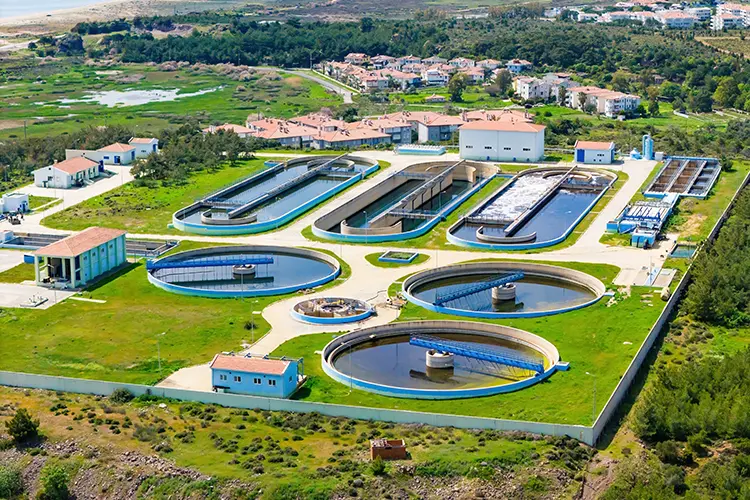
Purification and treatment facilities. Industrial wastewater cleaning infrastructure

Support for leachate treatment and water infrastructure projects through technical, financial, and environmental assessments.

PPP Advisory in Qatar – FAQs

What is a Public-Private Partnership?

A Public-Private Partnership (PPP) is a long-term collaboration between a government entity and a private sector partner to deliver public infrastructure, assets, or services. Under a PPP model, the private sector often brings technical expertise, investment capacity, operational efficiency, and innovation, while the public sector ensures that the project remains aligned with national priorities and public value.

PPPs are increasingly important in Qatar as the country continues to diversify its economy, enhance public service delivery, and develop resilient infrastructure in line with Qatar National Vision 2030. They allow the government to benefit from private sector expertise while improving project efficiency, risk sharing, lifecycle cost management, and long-term asset performance.

PPPs can be applied across a wide range of sectors, including education, healthcare, transport, utilities, waste management, district cooling, renewable energy, real estate, social infrastructure, and public facilities. In Qatar, PPPs are particularly relevant for infrastructure and service-based projects that require long-term planning, operational efficiency, and sustainability integration.

PPP advisory supports public and private sector clients throughout the full project lifecycle, from early-stage feasibility and market assessment to procurement, transaction structuring, risk allocation, implementation support, and performance monitoring. The objective is to ensure that PPP projects are commercially viable, technically sound, legally robust, and aligned with policy and sustainability objectives.

PPP projects require careful management of construction risk, demand risk, financing risk, operational risk, regulatory risk, environmental risk, and performance risk. A well-structured PPP clearly defines which party is best placed to manage each risk, supported by strong contracts, governance mechanisms, monitoring systems, and contingency planning.

PPP advisory in Qatar involves feasibility studies, financial modelling, risk allocation, procurement support, and contract structuring to ensure successful project delivery.

Looking Ahead

As Qatar continues to expand the use of Public-Private Partnerships (PPPs) across strategic sectors, there is a growing need for advisory support that combines technical, financial, commercial, and environmental expertise.

The future of PPPs in Qatar will not only depend on the ability to attract private investment, but also on the ability to structure projects that are resilient, efficient, and aligned with national priorities.

Through integrated advisory services, PPP projects can become a powerful tool for delivering infrastructure that creates long-term value for the economy, society, and the environment.